2026-11-24 ·
The Role of Dehumidifiers in Atlanta Water Damage Recovery
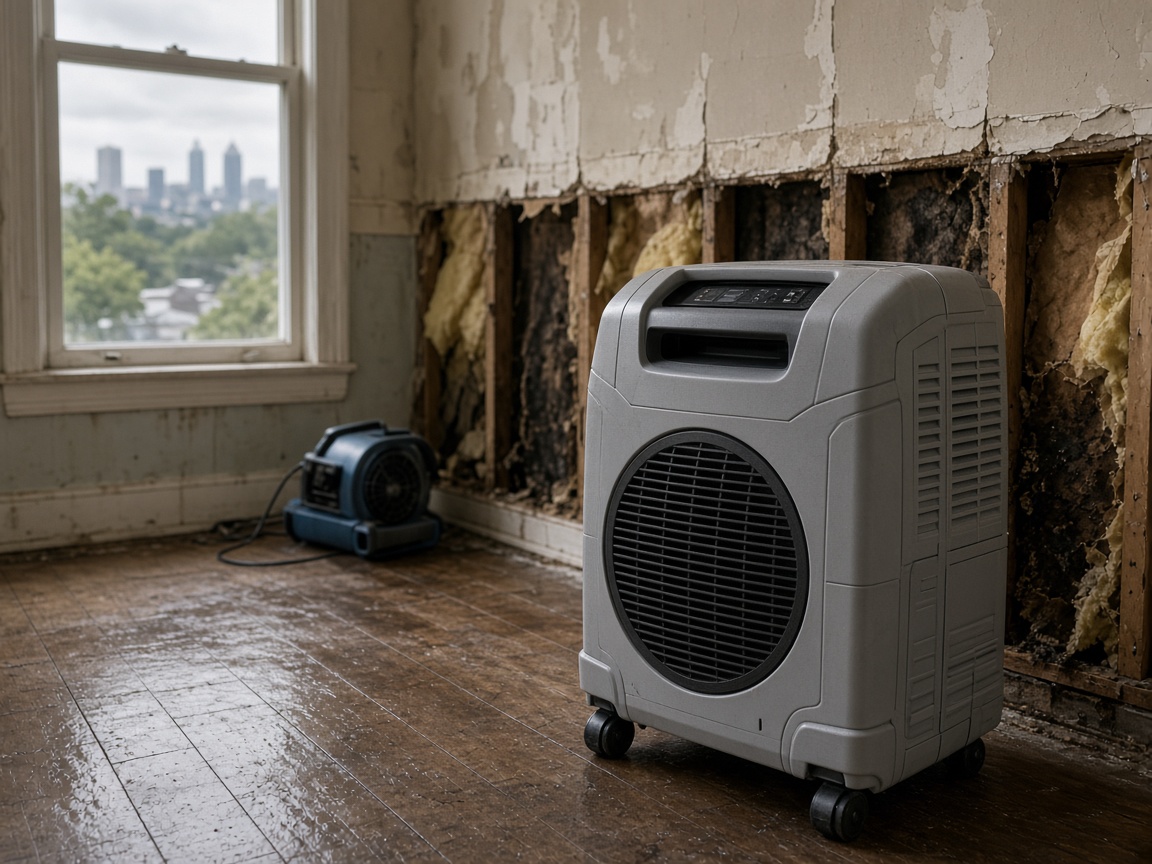
Dehumidifiers play a absolutely critical role in Atlanta water damage recovery, often making the difference between a quick dry-out and prolonged structural issues or widespread mold growth. In our humid Georgia climate, especially during the warm, muggy summers from June through September, simply removing standing water isn't enough. The air itself holds a significant amount of moisture, which can continue to saturate porous materials long after the visible water is gone. Professional-grade dehumidifiers work by pulling this excess moisture out of the air, lowering the relative humidity to levels that inhibit microbial growth and allow materials like drywall, wood, and insulation to dry thoroughly. This proactive approach is vital for homes across the Atlanta area, from older residences in Decatur with their original wood framing to newer constructions in Johns Creek, all susceptible to the lingering effects of hidden moisture.
Understanding Atlanta's Humidity Challenge
Atlanta's climate presents a unique challenge for water damage restoration. We experience hot, humid summers and generally mild, but still damp, winters. This consistent atmospheric moisture means that after a plumbing leak in a Sandy Springs basement or a roof breach during a heavy thunderstorm in Marietta, the ambient air is already saturated. Without active dehumidification, materials that have absorbed water will dry very slowly, if at all, creating a perfect breeding ground for mold within 24–48 hours. This is especially true in areas like the Chattahoochee River corridor, where localized humidity can be even higher. Our homes, many built with materials like gypsum board and wood, act like sponges, readily absorbing this moisture. Ignoring the humidity after initial water extraction can lead to costly secondary damage, including warped flooring, swollen cabinetry, and compromised structural integrity, not to mention significant indoor air quality issues from mold spores.
The Science Behind Dehumidification in Water Damage
When water damage occurs, materials become saturated. The goal of restoration is not just to remove standing water but to dry these materials back to their normal moisture content. This process, known as desiccation, is significantly accelerated and controlled by dehumidifiers. These machines work on the principle of condensation or desiccant absorption. Refrigerant dehumidifiers cool air below its dew point, causing water vapor to condense into liquid, which is then collected in a reservoir or pumped away. Desiccant dehumidifiers, on the other hand, use a material like silica gel to absorb moisture directly from the air. By continuously circulating and drying the air, professional dehumidifiers create a vapor pressure differential between the wet materials and the drier air, effectively pulling moisture out of the affected structures. This scientific approach ensures a thorough and efficient drying process, crucial for preventing long-term problems in homes throughout the Georgia area.
Types of Dehumidifiers Used in Professional Restoration
For professional water damage recovery in Atlanta, we rely on industrial-grade dehumidifiers that are far more powerful and efficient than typical residential units. There are primarily two types: refrigerant (or LGR – Low Grain Refrigerant) and desiccant dehumidifiers. LGR dehumidifiers are the workhorses for most water damage scenarios, especially in typical Atlanta temperatures and humidity levels. They excel at removing large quantities of moisture, even when the air is relatively cool and dry. Desiccant dehumidifiers are often used in conjunction with LGR units or in specialized situations where very low humidity levels are required, or in cooler environments like a flooded basement in an older home in Stockbridge during winter. These units can pull moisture out of the air even when it's already quite dry, ensuring that even deeply saturated materials reach their optimal moisture content. The selection of the right type and number of dehumidifiers is critical and depends on factors like the extent of the damage, the size of the affected area, and the ambient conditions.
Preventing Secondary Damage: Mold and Structural Issues
The most immediate and critical role of dehumidifiers in Atlanta water damage recovery is preventing mold growth. Given our region's propensity for humidity, mold can begin to colonize within 24–48 hours of water intrusion. By rapidly reducing ambient moisture levels, dehumidifiers deny mold the essential conditions it needs to thrive. Beyond mold, unchecked moisture can lead to severe structural damage. Wood framing can warp, buckle, and rot; drywall can crumble; and flooring can delaminate or cup. In older homes common in areas like Avondale Estates or College Park, moisture can also compromise plaster and lath. Dehumidifiers, alongside powerful air movers, ensure that these materials dry evenly and thoroughly, mitigating the risk of long-term structural integrity issues. This preventative measure is a cornerstone of effective water damage mitigation and helps safeguard your property value and indoor air quality.
The Dehumidification Process: What to Expect
When our team responds to water damage in Georgia, the dehumidification process is a critical phase following water extraction. First, we assess the extent of moisture saturation using specialized meters to identify all affected areas, even those not visibly wet. Then, we strategically place industrial-grade dehumidifiers, often paired with high-velocity air movers, to create a controlled drying environment. The number and type of dehumidifiers deployed depend on the size of the affected space, the class of water damage, and the ambient humidity. We continuously monitor moisture levels in the air and materials, adjusting equipment as needed to ensure optimal drying conditions. This meticulous process ensures that all hidden moisture is addressed, preventing future problems like mold or structural decay. Our goal is to restore your home to its pre-damage condition efficiently and effectively, a key part of our comprehensive water damage restoration services.